Music
What a Wedding DJ and Live Sax Set Should Sound Like
· C-Zone Entertainment
Saxophone over a DJ set is having a moment. Years of clips on TikTok and Instagram have turned it into one of the most requested additions in wedding entertainment. Most couples who ask for it have watched thirty seconds of a horn player on a packed floor and thought: yes, that.
Thirty seconds is the part that always looks good. What decides whether your guests talk about it for a year or quietly wish it would stop is the other two hours. Almost nobody explains that part before you book.
The sax should be off more than it's on
A wedding dance set runs two to two and a half hours. The saxophone should be audible for a fraction of it.
The shape that works looks like this. Ten or fifteen minutes pass with no horn at all. Then a song arrives that was built for one, the player walks into the middle of the floor, plays through two songs shoulder to shoulder with your guests and steps away. Ten more minutes go by. It happens again.
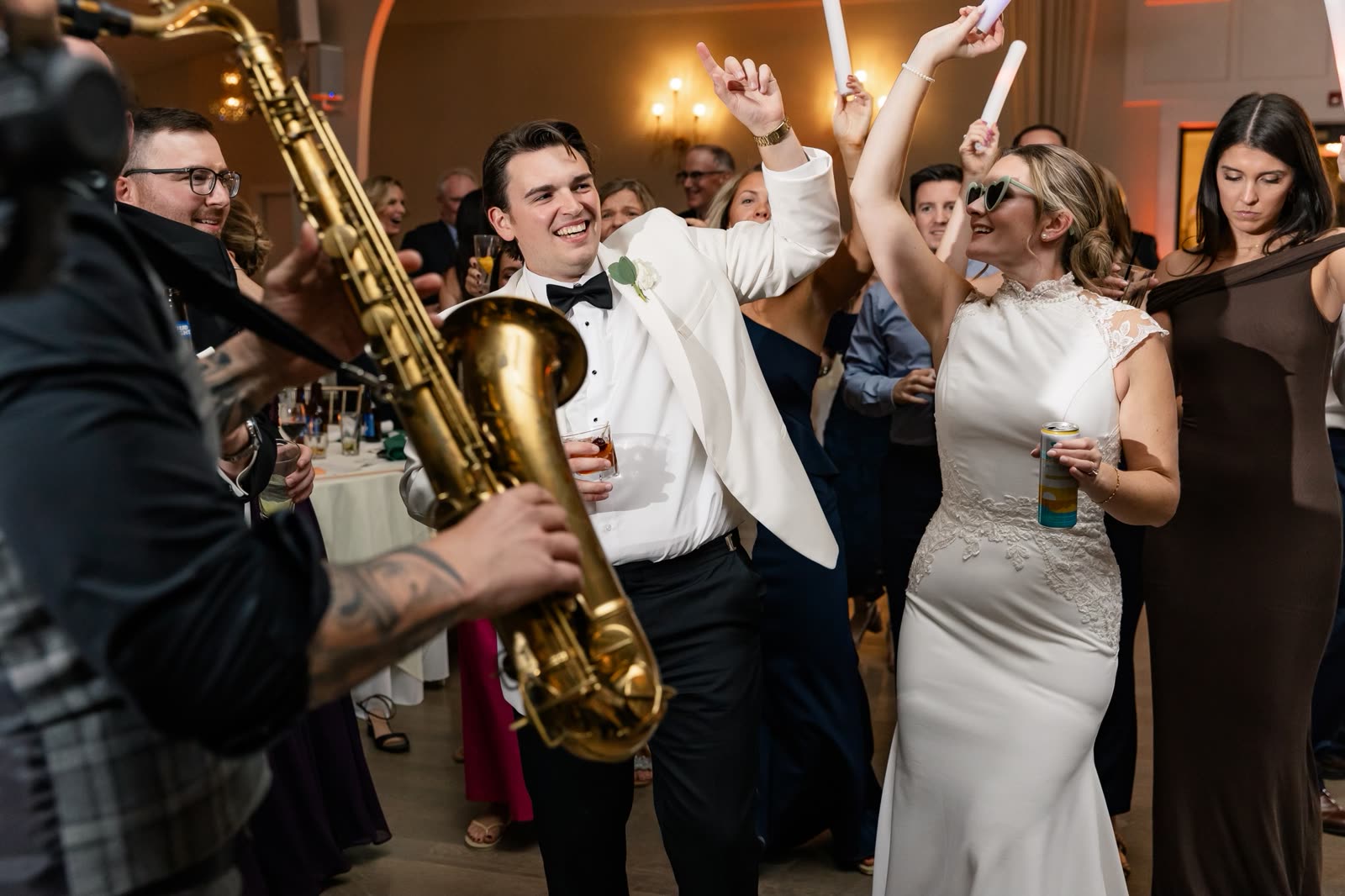 Two songs, right out in the middle of the floor. Then he steps away.
Used that way the horn never stops being an event. Every entrance lands like the first one. Play it continuously and the same instrument turns into background texture by the second hour, then an irritant by the third. By the end of the night guests are no longer thinking how great that sounds. They are wishing the horn player would get out of their faces.
Boston heard this in 1999
The format is not new, though the current wave makes it look that way.
In the late 1990s Greg Capozzi went to London to hear DJs he admired and found something Boston did not have yet: DJs performing alongside live musicians. One had a vocalist. One had a conga player. One had a saxophonist. He already played saxophone. He already DJ'd on vinyl. So he brought the idea home and started doing both at once in Boston clubs in 1999, years before laptops replaced crates.
He ran it until around 2005, when C-Zone got busy enough that the club nights had to end. The lineup grew along the way. A percussionist from Berklee joined him, then an ad at the school brought in a trumpet student who went on to teach there. Some nights it was saxophone and percussion. Some nights saxophone and trumpet.
Nearly thirty years of playing professionally is what sits behind the opinions in the rest of this guide.
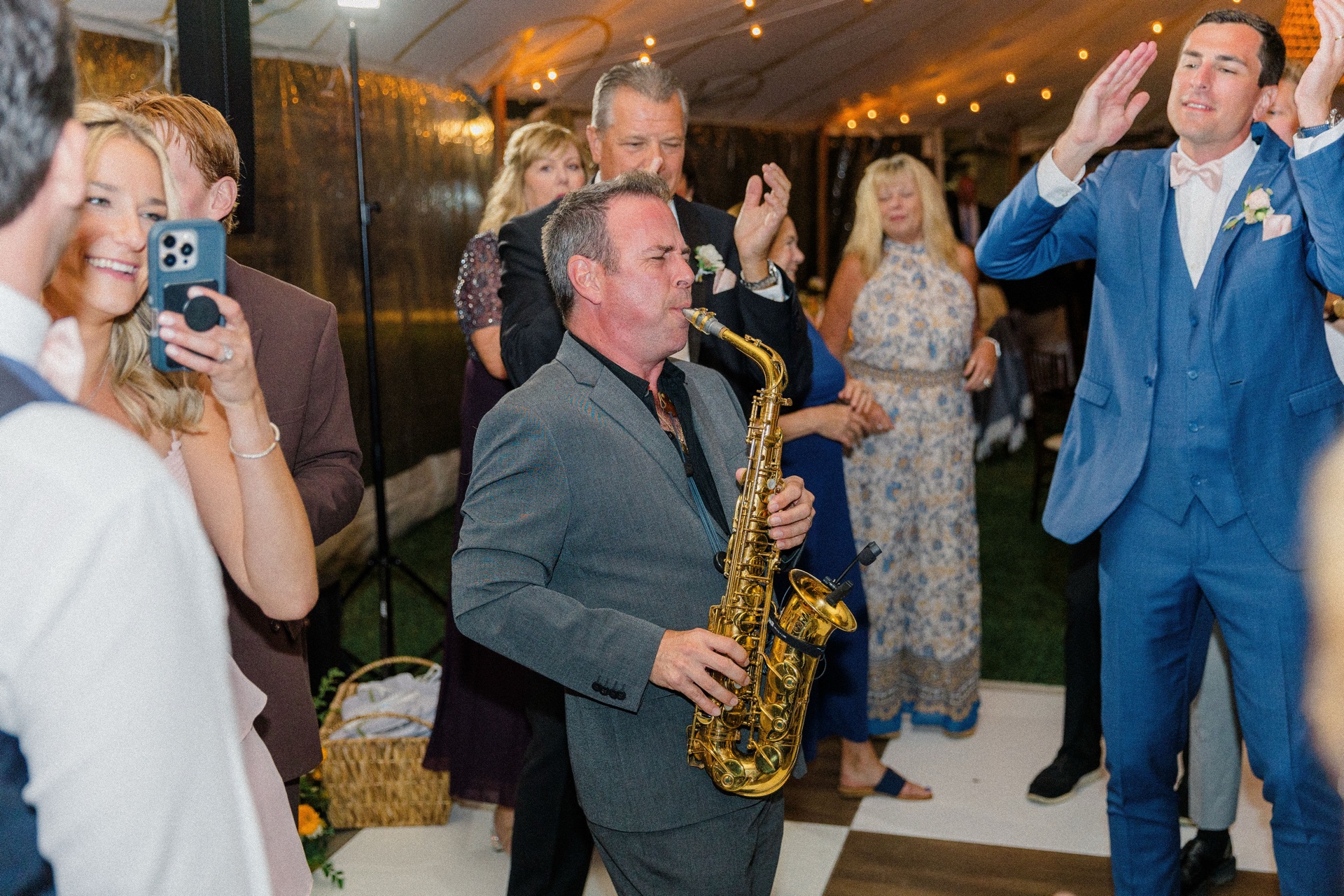 The format he brought back from London, doing the same job at a wedding today.
Why most sax sets go wrong now
Since the format went viral, companies have been hiring saxophone players faster than they can train them. Some are excellent. Many are not. The same problems keep appearing.
Start with tone. A thin, whiny, tinny sound gives a room ear fatigue inside two songs. No amount of enthusiasm hides it.
Then there is the playing itself. A lot of these players only double the melody the singer is already singing, over and over, with no improvisation anywhere in the set. There is nothing wrong with doubling a melody in the right place. There is a great deal wrong with doing only that for two hours.
The third problem is the one that actually damages a reception: they never stop. And some of them reach for theatre to fill the gap, climbing onto tables and chairs or lying on the floor. That is a dog and pony show. It is not live music.
Technique is not the same as timing
Plenty of these players are genuinely extraordinary. Conservatory graduates with performance degrees are, in Greg's phrase, lethal weapons on the instrument. Several of them could outplay him and he says so freely.
It does not make them right for a wedding. Playing well and knowing when to stop are separate skills and school only teaches one of them. A player who never leaves the floor has stopped performing for the room and started performing for himself.
To your guests, two excellent players sound the same. What separates them is that one knew when to put the horn down. Dazzle a room with small bursts of brilliance and it remembers them. Never shut up and it remembers something else.
What the DJ is doing while the horn plays
A good saxophone set is a duet, not a soloist with background music. Most of that work belongs to the DJ.
Modern DJ software can pull a finished track apart live, a technique called stemming. Vocals, bass, drums and melody can each be removed or isolated on the fly. That used to require the original studio session files.
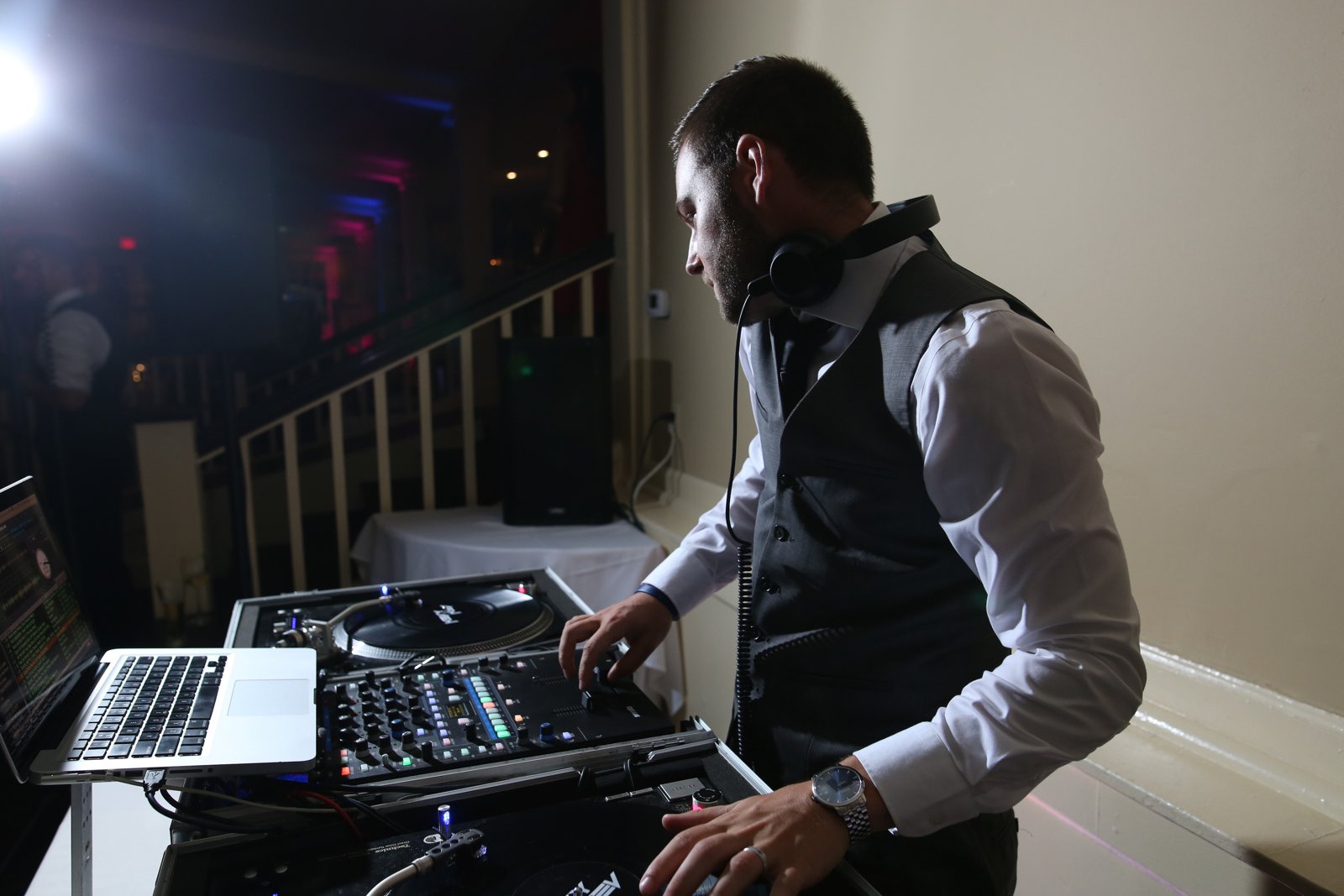 Stemming and looping happen here, live, while the horn is out on the floor.
So when the horn comes out, a skilled DJ has real options. Strip out the vocal and let the saxophone carry the line the singer would have sung. Or drop into a loop of drums and bass alone, handing the player an open canvas for improvisation. When the moment has run its course, a scratch out of the loop tells the saxophonist to wind up. The set rolls forward without a seam.
Ask any company you are considering how their DJ and their horn player cue each other during a set. A vague answer usually means the saxophone is playing over the music rather than with it.
Which songs work with a saxophone
Horn-heavy ones, mostly. The test is whether a song leaves the saxophone somewhere to go. Five kinds of record reliably do.
- Brass already in the arrangement. Earth, Wind & Fire is the template. The line exists in the record, so the player doubles a part the song already contains and the room hears it live rather than sampled.
- Latin and reggaeton. Bad Bunny, Pitbull, Farruko. Busy low end, open space up top, which is exactly where a saxophone wants to sit.
- Current pop built on a horn hook. New records go this way constantly. Guests clock the riff the second it turns live in front of them.
- Anything with a vocal the DJ can pull out. Strip the vocal and the saxophone carries the melody the singer would have sung. A song everyone knows becomes one nobody has heard quite that way.
- Songs with a loop worth soloing over. Drums and bass alone give the player room to genuinely improvise rather than trace a melody someone else wrote.
Some music simply does not want a saxophone anywhere near it. Sparse, slow, repetitive hip-hop leaves a horn nothing to add. Neither does pop punk. Nobody needs a saxophone over Blink-182 and a player who attempts it is filling space rather than adding to it. A company willing to tell you that is a company paying attention to the music.
Choose your sax moments before the day
None of this has to be left to chance on the night.
C-Zone keeps a running Spotify list of songs that work well with live horn. Pick the ones you like. Those go to the saxophonist and the DJ ahead of time, so the DJ knows to play them and the player already knows the horn lines. The big moments get planned rather than improvised into existence at eleven at night.
Your song requests from the planning portal reach the saxophonist as well. He goes through them before the wedding and identifies which ones suit live horn. The rest he leaves alone.
What to ask before you book one
If you are comparing companies, these four questions separate them quickly.
- How much of the night will the saxophone actually be playing?
- Who is the player and how long have they worked with your DJs?
- How do the DJ and the horn player cue each other during a set?
- Can we see them at a real event rather than in a highlight clip?
The answer to the first one tells you most of what you need. A company that treats "the whole time" as a selling point has misunderstood the instrument.
You can watch our players at real weddings on the DJ and live sax page. The Massachusetts wedding DJ cost guide covers what a DJ with live sax runs alongside everything else. When you are ready, request a quote with your date and venue and we will come back with availability and a price.
Frequently asked questions
Does the saxophone player play the whole time?+
No. That is the single most important thing to get right. A wedding dance set runs two to two and a half hours and the horn should be out for a small share of it. Expect stretches of ten or fifteen minutes with no saxophone at all, then a song or two where the player is in the middle of the floor. Used sparingly it stays exciting all night. Played continuously it becomes wallpaper by the second hour.
Does the saxophone player improvise, or just play along with the song?+
Both, depending on the track. On a horn-heavy song the player doubles the brass line already written into the arrangement, so it sounds like the record with the horn live in the room. When the DJ strips out the vocal or drops into a loop, the player solos over the top.
Does the saxophone player come out onto the dance floor?+
Yes, for chosen moments. The rest of the time the player performs next to the DJ. Being out in the crowd is a large part of why it lands, which is exactly why it stops working when it goes on all night.
Which genres sound best with a saxophone?+
Anything with brass already in the arrangement. Funk and soul, Latin and reggaeton and a good deal of current pop built on a horn hook. Sparse slow hip-hop and pop punk give a horn very little to use, so we leave those alone rather than forcing it.
Will the saxophone player see the song requests I put in the planning portal?+
Yes. The player reads your requests before the wedding and works out which ones suit live horn. C-Zone also keeps a running Spotify list of songs that work well with saxophone, so you can choose your moments in advance instead of leaving them to the night.